
Tag Archives: pregnancy

Folate vs. Folic Acid, Neural Tube Defects vs. Autism – Clearing up the Confusion

 
I’ve had some (panicked) questions about the recent articles on folic acid supplementation during pregnancy and increased risk of autism. Let’s chat science:
 
1. This study is what is called an Observational Study. Do these types of studies have their merits? Absolutely. Do they establish causation? Absolutely NOT. This study looked at blood levels of folate and B12 in newborns 24-72 hours after birth, and then the development of ASD later in life. A correlation was established. Correlation – just like how eating ice cream increases your risk of being bitten by a shark.
 
“LOGIC”: eating ice cream happens more in the summer –> the summer equals more people swimming in the ocean –> more people swimming in the ocean increases the risk of shark attacks, therefore eating ice cream –> increased risk of shark attack. Absurd.
 
Now it’s important to not simply throw out a study because it’s correlational. Correlational studies are the jumping off point for mechanistic studies. But, we can’t make recommendations, especially dramatic ones, on correlation. 
 
2. No mechanism is established. But you know what we do have a mechanism for? Folate deficiency and neural tube defects. The neural tube is the part of the embryo that turns into the spine. It closes at 3 weeks post-conception, and REQUIRES folate to do so successfully. There is a known, causal mechanism for folate deficiency and NTDs like spina bifida. And the fact that it is required so early in pregnancy, before many women know they’re pregnant, shows how important it is to be taking folate (or eating a TON of leafy greens and chicken livers) prior to conceiving.
 
3. Population. Direct quote from the study:
“Data are from the Boston Birth Cohort…that recruited low-income urban, primarily minority mother-offspring pairs…followed them from birth through childhood…”
There are many confounding factors in that statement alone. For example, income is the number one determinant of health. This shows that it is important to analyze the actual study, instead of just reading a headline.
 
4. Folate vs. Folic Acid. Have you noticed that I’ve only used the word “folate” thus far? That’s because FOLATE is the food-based version of this important B vitamin. It’s the one the body needs and recognizes as usable. Folic Acid is a synthetic form of folate – it is not the same thing, and in some cases (usually with genetic anomalies) it can cause problems. Most people uses these 2 terms interchangeably but I cannot stress the importance of recognizing the difference. Finding a pre-natal supplement that contains FOLATE is challenging, but there are a few out there. You want to look for something that says “folate” or “active folate” or “methylated folate”. My favourite is Designs for Health, in combination with lots of leafy greens and regular liver consumption.
 
5. More isn’t better, it’s just more. As with all supplementation, more isn’t better. Follow your practitioner’s recommendations for the amount of folate to consume (just make sure it’s folate, not folic acid, and make sure that if your practitioner wants you to stop supplementing, they read the STUDY not the news article…otherwise get a second opinion.) Better yet, get most of it from your food. Leafy greens and chicken livers are your best sources!
 
6. Nutrients do not work in isolation. High levels of plasma folate and B12 indicate a metabolic issue – either stemming from a genetic anomaly (like the MTHFR mutation) or more often, other nutrient deficiencies. A diet high in all the nutrients (as in, not just from a pre-natal, but from consuming lots of vegetables, fruit, liver, meat, fish, eggs and quality fats) is required for all systems to function properly. Check out my free handout for a nutrient dense diet for fertility and pregnancy.
 
7. The media and nutrition. This is a post in and of itself, but to sum up quickly – the media should be ashamed of themselves for the way they create fear through headlines. No one ever reads the study before creating a shocking, and terrifying title. Case in point this study – the study authors conclusion:
“In this urban low-income minority birth cohort, we observed an elevated risk of ASD associated with high maternal plasma folate levels (>59 nmol/L), which far exceeds the excess cutoff suggested by the WHO (>45.3 nmol/L); however reported maternal vitamin supplementation was protective. Excess maternal vitamin B12 (>600 pmol/L) in pregnancy was also shown to be associated with greater ASD risk in offspring. The risk of ASD was highest if mothers had both excess prenatal folate and vitamin B12 levels. Our findings warrant additional investigation and highlight the need to identify optimum prenatal folate and vitamin B12 levels that maximize health benefits, at the same time minimize the risk of excess and its associated adverse consequences such as ASD.”
An interview with the study authors states this even more emphatically:
“Our work is very consistent with previous work showing that supplementation is critical to maternal health and child development and health, so at this point the recommendation is definitely to continue supplementation. What this study finds is that while maintaining adequate levels of folate is important, extreme levels may be harmful.”
What does all that mean?
 

Continue supplementing during pregnancy!

In summary, please do not freak out if you’ve been taking prenatals thus far. They are incredibly important (and this is coming from someone who prefers food over supplements most of the time!). Ideally switch to a version that contains folate, the active form of the nutrient recognized by the body. Keep the diet incredibly rich in nutrients by focusing on lots of leafy greens, quality meat & organ meats, egg yolks, fish, grass-fed dairy (if tolerated), bone broth and probiotic-rich foods (like sauerkraut & kombucha).
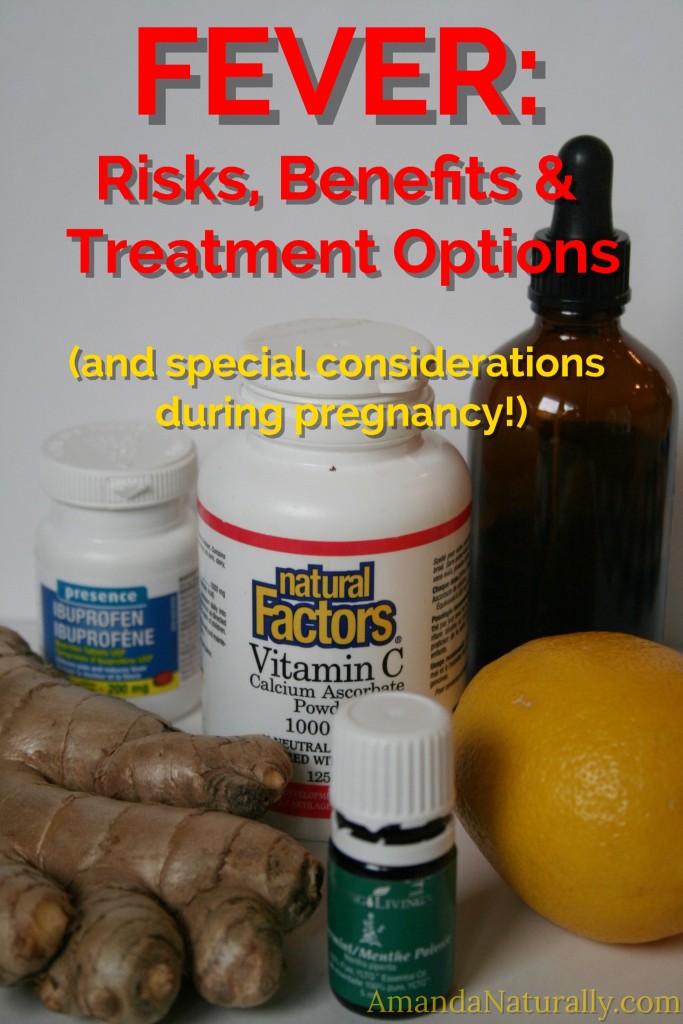
Fever: The Role in Immune Function, Benefits & Risks of Treatment, Natural Remedies

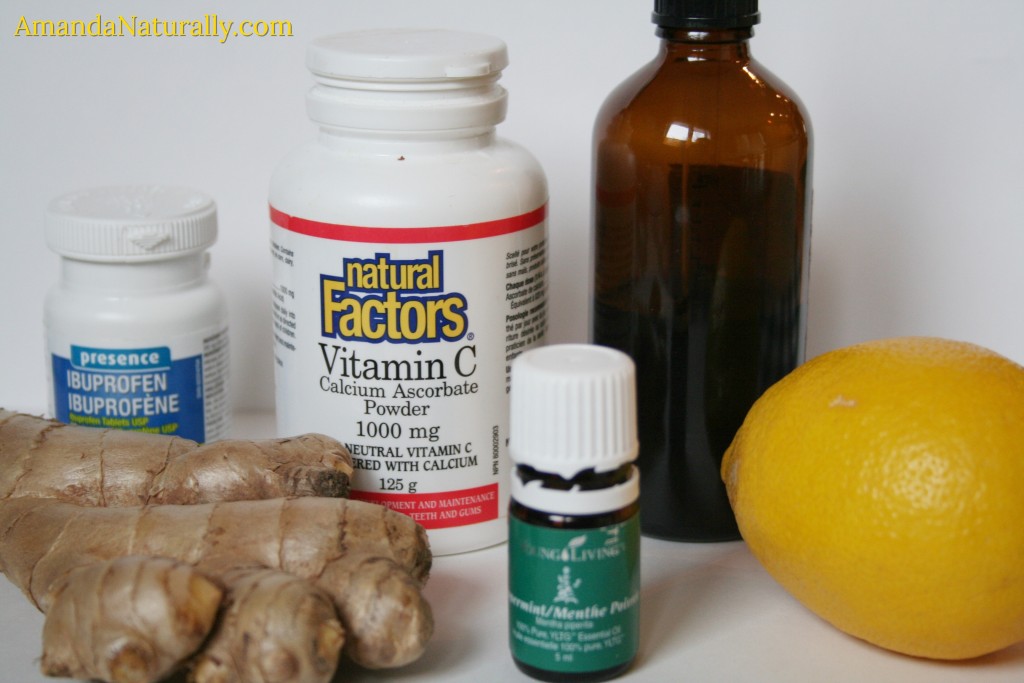
FeverSo I’ve been sick. Really sick. It came on as a slight cough last Tuesday – I thought it was residual from a cardio-intensive workout that morning. But by the evening it was still there. I immediately started hitting it with everything I had. Now normally my arsenal is pretty large, considering my hubby is a naturopath and we have a dispensary in our basement, lol. But considering the fact that I’m pregnant, most of the herbs we have on site are off-limits. So I stuck with a large dose of Vitamin C, some essential oils, and a plan to sleep in as late as possible the next morning.
And then the morning arrived. I felt ok. The cough had settled in for sure, but not too bad. By mid-morning my whole body hurt. Again I chocked it up to yesterdays workout, but the level of discomfort was not appropriate for that workout. That’s when I started realizing I was seriously sick. This wasn’t just a little cough. When I started feeling listless and realized I had laid in bed for an hour doing nothing (no TV, reading, podcasts – nada), I took my temperature: 

101.6F

Yowza that’s high (ish). And I’m pregnant. And the risk of injury to the baby with a chronically elevated temperature is real. I was able to bring it down a full degree within an hour, by implementing some classic natural anti-febrile techniques, which I’ll share with you below! But first, a bit on fevers…


NOTE: I am not a medical doctor. I am not making any medical recommendations and this is not medical advice. I am simply trying to provide some clear information on a common health occurrence. Please speak with your health care practitioner before making any changes to your health care routine.


What is a fever?

A fever is a natural rise in your body temperature, in response to an infection – either bacterial or viral. It is not a disease in itself, but a symptom of an underlying issue. So like all health issues, it’s important to address the underlying cause, instead of just suppressing the symptoms.

Why do we develop a fever?

It is believed that the elevation in temperature is actually a critical step in helping our bodies fight off infection. It seems to (a) activate our immune system by sending white blood cells and macrophages to the infection site, and (b) inhibit enzymes and other functions required for viral and bacterial replication. For example, it has been hypothesized that most bacteria can’t survive in temperatures above 101F and viruses, above 102F. 

In fact many cold-blooded animals, when inoculated with pathogens, will instinctively find ways to increase their body temperatures to feverish levels, by seeking out warmer environments. Fascinating eh?  (<– btw, clearly I’m Canadian, if you didn’t already know…)

Isn’t a fever dangerous?

Well yes, it can be. Uncontrolled, very high body temperatures can result in severe dehydration and possibly induce febrile seizure. Which is why you want to monitor it. But mostly, they’re just damn uncomfortable.

Now, when it comes to fever during pregnancy, there’s a little more to consider. Your baby is developing and that requires a specific temperature for everything to work properly. This is why your doctor told you not to use a hot tub or take hot baths. Prolonged, elevated body temperatures may impair important developmental processes, specifically in the brain.

Anti-Febrile Meds?

The conventional approach is to take an anti-febrile medication as soon as your temperature gets a little above normal. Ibuprofen (Advil), acetaminophen (Tylenol) and naproxen (Aleve) are the 3 recommended meds. Do they work? Oh hell yeah. Are there side effects? Definitely. So it becomes a relative risk-reward assessment situation.

NSAIDS (like Advil and Aleve) cause leaky gut. Period, end of story. If you have a history of health issues or an autoimmune condition, this is something to consider. Importantly during pregnancy, Ibuprofen is considered  level 4 risk, during the 3rd trimester. As in, there is significant evidence of it causing harm to the baby, specifically their heart.

Acetaminophen is the leading cause of acute liver failure in the USA. The metabolic byproduct of detoxifying acetaminophen is NAPQI, which is responsible for necrosis of the liver. While NAPQI does not cross the placental barrier, acetaminophen readily does. Which needs to be considered since a developing baby’s liver starts being responsible for its own detoxification at around 18 weeks.

Additionally, suppressing a fever has been shown to prolong the duration of the illness, which makes sense since you’re also suppressing your immune system from doing its job!

Natural Approaches to Reducing a Fever

So what did I do?

MONITOR: Most importantly I was monitoring my temperature every hour, making sure it didn’t get to a temperature that we (my husband, my health care provider and I) had decided would be our “time for serious action” temp. I also monitored every few hours at night.

WARMING SOCKS: This age-old home remedy is a favourite amongst crunchy mamas. You take a pair of thin cotton socks and soak them in cold tap water. Put them on your feet, and add a second pair of socks, preferably wool to keep the water in. When the socks warm up, rinse them in cold water again and repeat. The idea behind this hydrotherapy technique is by keeping the feet cold and wet, you create a sort of “heat exchange”. Your body increases circulation to your feet, dissipating heat in order to warm up the feet/socks.

ICE PACK: Place a cool ice pack at the base of the neck, where there is a high concentration of temperature receptors. This can help dictate the internal temperature of the body.

ESSENTIAL OILS: I’m new to the field of essential oils, but I’m quite enjoying learning how to use these additional tools. I hit up the Wellness Mama (she’s my go-to for natural remedies) and she recommended pure peppermint essential oil (I use Young Living brand) on the back of the neck and on the bottom of the feet (see above for why those locations). 

I did all 3 things and brought my temperature to 100.1 within an hour. 

BACK UP…MEDS: Considering the risk of a high fever and developmental issues regarding the baby, I had an Ibuprofen on stand by, just in case my temp got above the predetermined comfortable zone for us (I’m purposely not sharing, because that’s something for you to determine with your health care provider). I chose Ibuprofen because although I have a history of major gut issues and serious autoimmune risk, I am 18 weeks pregnant. Which is far enough out from my third trimester to decrease the risk of ibuprofen and heart defects, but definitely far enough in that I didn’t want my baby’s liver to take the hit of the acetaminophen. Luckily I didn’t have to use either, because the above tricks worked tremendously. 

Additional Support

There were a few other things I did to help my body recover from this (likely) flu as fast as possible. 

  1. Convalesce. I did nothing. Nada. Even though by day 3 I was so bored of TV, I rested, napped, and generally took it easy. Pushing through is a sure way to stay sick and get sicker. I’d rather take a few days off and get better, then push through and 2 weeks from now find out I have pneumonia and have to go on antibiotics.
  2. Bone broth. Like crazy. It helps keep the gut strong and regulates your immune system. I had soup multiple times a day. I also cooked white rice in broth, to get some calories in me. Find out how I store my bone broth to make it easy to use, even when you’re sick and have no energy for food prep! I added onions and garlic to my broth for an additional immune boost. I also added some gentle veggies like spinach.
  3. Vitamin C. There aren’t very many supplements that are considered safe during pregnancy. Again, I worked with my team and determined a few herbs that are generally recognized as safe during pregnancy, but mostly focused on the simple stuff. High doses of vitamin C at regular intervals can shorten the duration of an illness. Good rule of thumb with vitamin C – take to bowel tolerance. As in, when you start noticing loose stool, pull back on your dose!
  4. Ginger, lemon and raw honey tea. I took a few slices of ginger root, a ΒΌ lemon and about 2 cups of hot water. I let simmer for about 20 minutes on the stove top. Strain and add a spoonful of raw honey. Alternately, you can juice a whole whack of ginger and lemons, and store the potent elixir in the fridge, adding a few tbsp to a mug of hot water and a spoonful of raw honey. This is what we normally do, but I was by myself during this illness and didn’t want to deal with the mess of the juicer (normally my hubby would take care of that), and by the time he returned home, he was sick too. 
  5. Fluids. Water, tea (see above), bone broth, mineral water and kombucha (specifically homemade lemon/ginger booch) were on constant rotation. Fever causes dehydration so keep your fluid intake high! 


Conclusion

Fevers can be a scary situation, especially in young kids or during pregnancy. But understanding their benefit can help decrease the stress around them. Monitoring and implementing some solid, natural remedies – combined with immune support to help your body fight the cause of the infection – can help you recover quickly and decrease the potential need for risky pharmaceutical intervention. Keeping in mind, that drugs save lives so there is definitely a time and a place for their use!


Birth Control

Two years before even starting to try to conceive, I went off the birth control. I went off it for other reasons as well, and while this post isn’t about birth control and health, it is important to recognize that birth control is not a 100% safe and harmless pharmaceutical. This is not the time or place to discuss whether or not oral contraception is right for you, I just want to bring to light 2 major reasons why it is important to come off the birth control pill more than a month before trying to conceive. 

  1. The birth control pill depletes nutrients. Building a baby requires nutrients. Lots of them. Like a seriously crazy amount. And if you’re just barely sufficient (or more likely depleted), do you think baby is going to take the hit? No way. Mom does. Baby will suck everything it needs from you and mom will be left with major nutrient deficiencies. In fact, many of the symptoms attributed to “pregnancy” may actually be pre-existing nutrient deficiencies rearing their ugly heads when your needs further increase. This may also play a role in why so many women experience the onset of health conditions (often autoimmune) after pregnancy, and why the 2nd pregnancy is often harder than the first since you go in further depleted than the first.
  2. The birth control pill artificially controls your hormones and floods your body with excess estrogen. While this is very effective for contraception, it can seriously mess with our natural hormonal processes. The body is very good at not wasting energy or resources when it doesn’t have to. So if it’s not required to manage your hormonal cycle, it’s not going to. That’s why it can take months to normalize after coming off. Which was exactly my experience – it was 3 months before I got my period, and 8 months before I ovulated, and a full year before things were working like clockwork. Imagine if I had gone off the pill and hoped to get pregnant the next month? That would have been devastating. And I would probably have ended up down the road of fertility treatments, simply because my body hadn’t normalized yet.

My recommendation is always to give yourself as much time between coming off the pill and trying to conceive as possible. Ideally 1 full year, and if you don’t have that time, aim for 6 months. But during those 6 months it is recommended that you work with someone to rebalance your hormones and flood the body with the nutrients that were depleted from continuous use of oral contraceptives.

Here are some great resources about oral contraception and for helping coming off the pill:

The Pill, Sex Drugs and Mood Swings Part 1 (Part 2 and Part 3)

5 Reasons to Come Off The Birth Control Pill 2+ Years Before You Plan To Start a Family

Birth Control Pills: How They Work, Benefits, And Risks

Birth Control Unlocked: Your Body, Your Options, Your Guide

How to Recover from Long Term Use of Birth Control Pills


Alternative Contraception Methods:

1. Taking Charge of Your Fertility by Toni Weschler – hands down the most informative book on learning how your body works and the Fertility Awareness Method. The subtitle is “The Definitive Guide to Natural Birth Control, Pregnancy Achievement, and Reproductive Health” which couldn’t be more accurate. I know a lot about the body, and my husband (a naturopath) knows even more and we learned SO much from this book. I couldn’t stop reading it! I used it to effectively prevent conception prior to when desired (in combination with the barrier method, see below) and it was very helpful once we did want to conceive! 

2. Barrier Method – the old fashioned barrier method (a.k.a. condoms) are still one of the most effective methods of contraception, if used correctly. However, one of my biggest issues with condoms is the materials they are made of and the sketchy ingredients in the lubricant and/or spermicide. The brands I recommend are Glyde and Sir Richard’s (bonus with this brand is they donate a box of condoms for every box you buy!).

3. Withdrawal Method (A Sex-Educator’s Take) – if it would absolutely be the worst to get pregnant, or you’re particularly anxious about it, combining the Fertility Awareness Method with a barrier AND withdrawal on your highly fertile days can be helpful in reducing stress and actually enjoying yourself! 

Copyright 2014 Amanda Naturally | Design by The Nectar Collective