Tag Archives: low carb

Simple Coleslaw with a Lime Vinaigrette

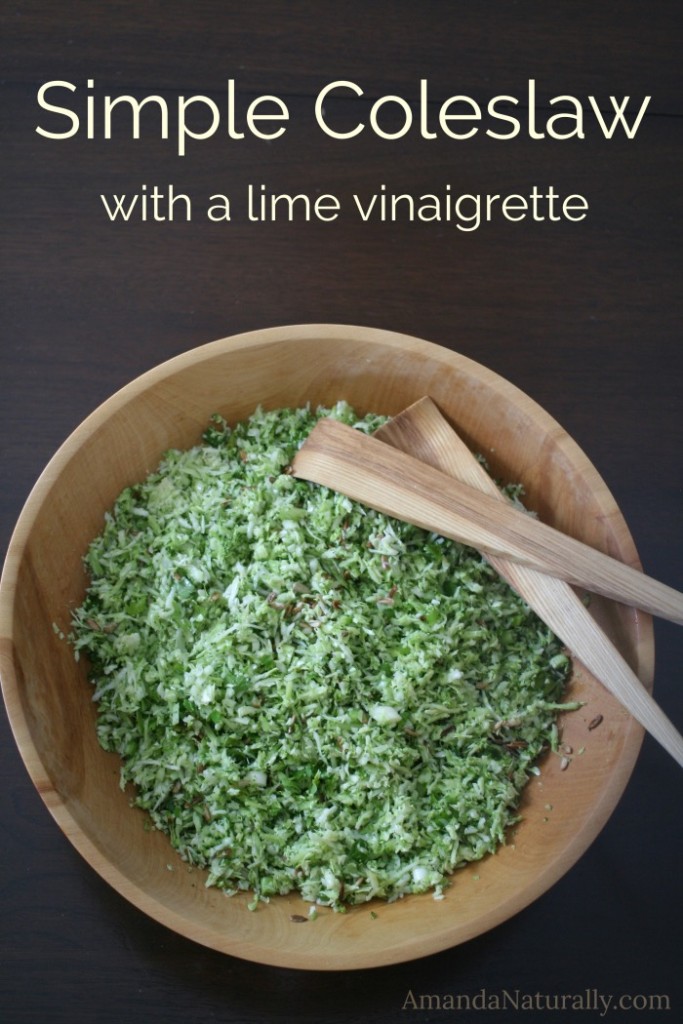
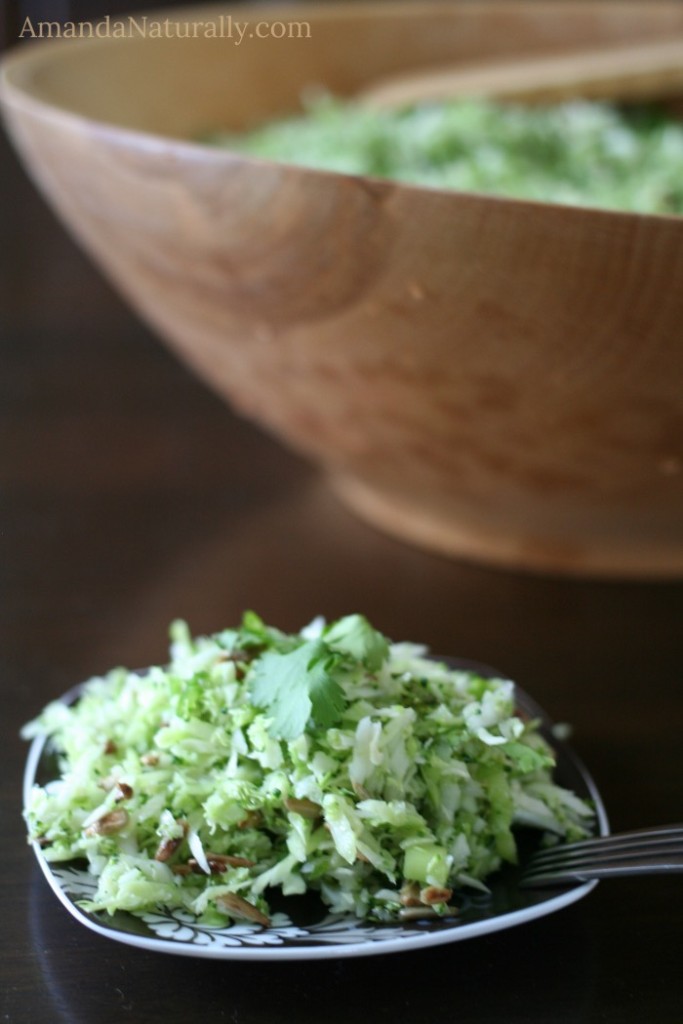
Simple Coleslaw with a Lime Vinaigrette | vegan, grain free, AIP | AmandaNaturally.comAs someone who never liked mayonnaise growing up, coleslaw was something that I avoided pretty passionately. I was even that weird kid who loved salads and veggies – but the mayo killed coleslaw for me. Then one day, a few years ago, I received a cabbage in our weekly veggie bin. So I hopped on the google, searched for “healthy coleslaw” and lo and behold, a vinaigrette version popped up! I made it and it was delicious. I was super jazzed to have a way of eating cabbage that I actually enjoyed.

So what’s the deal with cabbage anyway? Why am I so adamant about getting it into my diet? It’s because cabbage, along with other cruciferous veggies (kale, chard, collards, brussel sprouts, broccoli, cauliflower, bok choy), are nutritional powerhouses. Here are some of their health benefits:

  • very high in the sulfurous compound, glucosinolate, which is metabolized by the body into potent antioxidants isothiocyanate and thiocyanate.
  • isothiocyanates have also been shown to be effective in protecting against cancer, specifically breast, colon, cervical and prostate.
  • help the body excrete excess estrogens (this is particularly helpful for someone coming off of birth control, or anyone who has estrogen dominance. Also a good idea for everyone, because many of the chemicals we are exposed to daily, from plastics to fragrances to pesticides, are xeno-estrogens, which means they mimic estrogen in our body) (additional source)
  • contains sulforaphane which may reduce hypertension and improve kidney function
  • packed with nutrients – vitamins, minerals, phytonutrients, fibre
  • contains indole-3-carbinol which supports phase 2 liver detoxification, phase 1 is also supported via the sulforaphane content. This balance is important because many “liver supporters” only up regulate phase I. Phase 1 often turns chemicals into more toxic substrates, before phase 2 neutralizes them. Only supporting phase 1 liver detox can result in nasty symptoms. (Note: supporting phase 1 and 2 liver detoxification is real detox, not juice-cleansing, cayenne shooters, no protein “detox” – that’s a load of crap.)
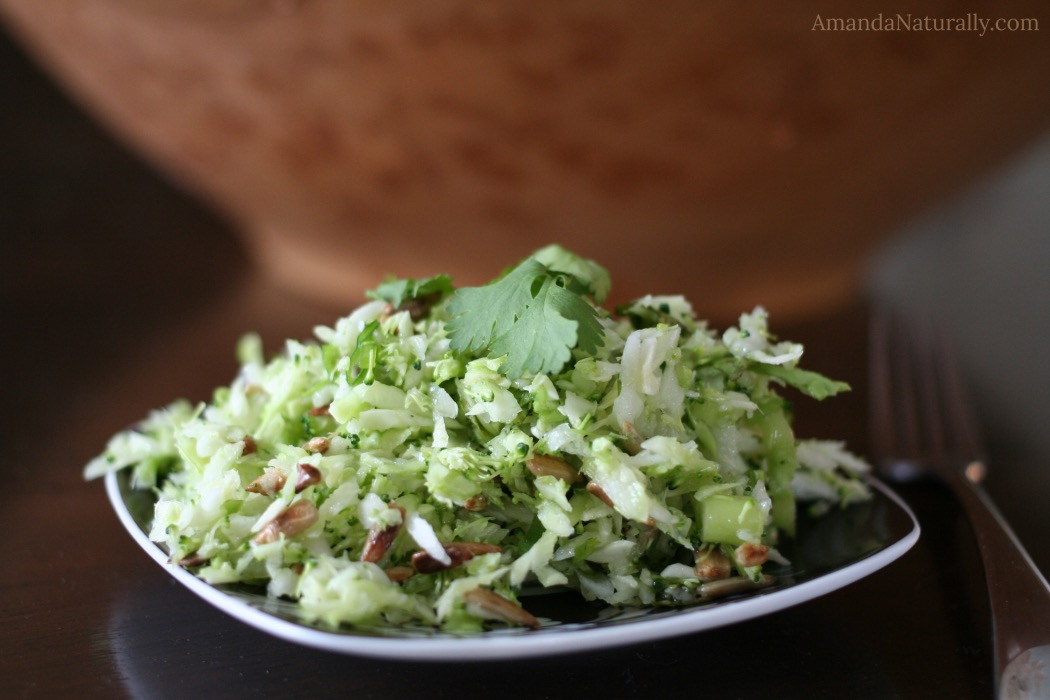
Another reason for consuming cabbage is it’s inexpensive, it makes a large quantity and it’s on the Clean Fifteen list so it doesn’t need to be organic. Also, unlike regular salad, when you turn it into coleslaw, it gets better the longer it sits in the fridge!! This Simple Coleslaw with a Lime Vinaigrette is my go-to in the summer – for potlucks to BBQs to a simple lunch paired with a few hard boiled eggs on a hot day. There’s a lot of flexibility with the ingredients too!

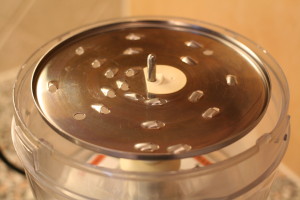
NOTE: Having a food processor with a shredder attachment is incredibly useful for making slaw. However, you can chop the cabbage up old school with a knife!
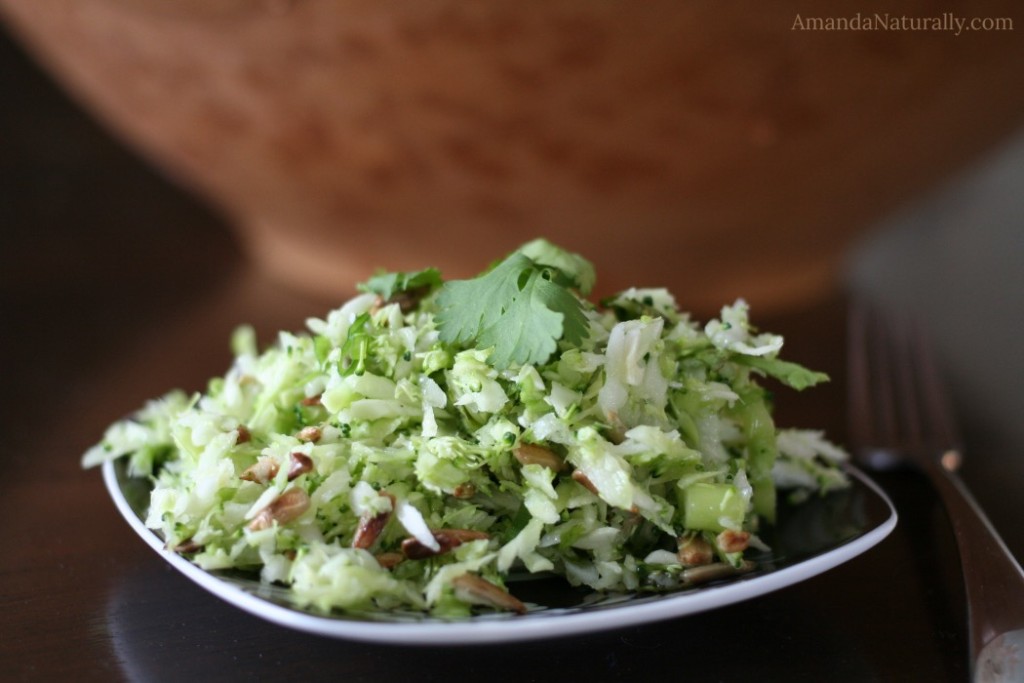
Simple Coleslaw with a Lime Vinaigrette | vegan, grain free, AIP | AmandaNaturally.com

Simple Coleslaw with a Lime Vinaigrette
This simple summer salad is perfect for everything from a BBQ to a quick lunch on a hot day. Highly nutritious and budget-friendly too!
Write a review
Print
Prep Time
10 min
Total Time
15 min
Prep Time
10 min
Total Time
15 min
Ingredients
  1. 1 head cabbage
  2. 1 bunch of hearty greens (broccoli, kale, collard greens)
  3. 1 bunch of green onions
  4. 1 bunch of cilantro
  5. ½ cup sunflower seeds, toasted**
Dressing
  1. juice of 2 limes
  2. ⅓ cup raw apple cider vinegar
  3. ⅓ cup olive oil
  4. sea salt
  5. black pepper**
Instructions
  1. Using the shredder attachment on your food processor, shred cabbage. Dump in a bowl.
  2. Shred broccoli or finely chop kale/collards. Add to the bowl.
  3. Chop green onions and cilantro. Add to the bowl along with toasted sunflower seeds.
  4. Combine dressing ingredients, whisk well and toss with coleslaw.
  5. Let sit for at least 30 minutes before serving.
Notes
  1. **AIP Modifications: omit black pepper, substitute shredded coconut for sunflower seeds
  2. This coleslaw gets better as it sits! So let it sit for a few hours or overnight before serving!
Amanda Naturally http://www.amandanaturally.com/
Simple Coleslaw with a Lime Vinaigrette | vegan, grain free, AIP | AmandaNaturally.com


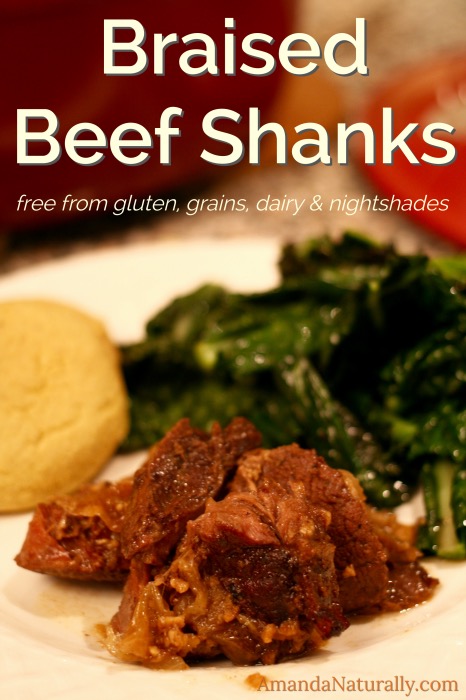
Braised Beef Shanks

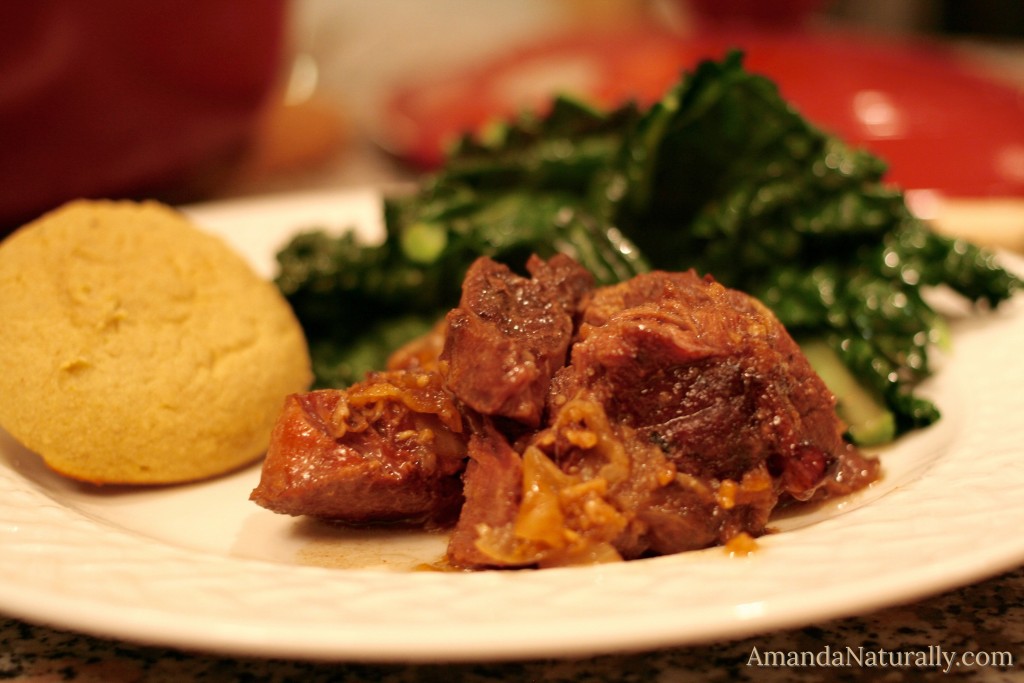
Braised Beef Shanks | paleo, AIP | AmandaNaturally.comBuying real meat, from happy healthy animals, is really important to me and it is something that we encourage clients to move towards. “Happy healthy animals” have been allowed to graze on pasture, eat the food they’re meat to eat (cattle = grass, poultry and pork = grass, bugs, weeds, scraps etc), are free of unnecessary antibiotics, free from hormones and other drugs used to fatten them up, and allowed to “express their pig-ness or cow-ness” as Joel Salatin from Polyface Farms would say.
From an ethical standpoint, it’s a no-brainer. Animals should be treated with respect throughout their entire lives, including the way it is ended. They should not be raised in factories. It is a despicable practice.

From an environmental standpoint, it’s also a no-brainer. Diana Rodgers explains it beautifully in her book The Homegrown Paleo, which I’ll summarize quickly here.

  1. In a healthy, sustainable farm, herbivore animals require very little inputs in terms of water, chemicals, heavy machinery, fertilizers, pesticides etc.
  2. Pasture animals are integral because they thrive on areas of land that cannot be used for vegetable (or grain) production.
  3. It’s not possible to have a healthy vegetable farm, without any contribution from animals. Decomposing animal parts (all parts!) are critical for returning life-giving nutrients like bacteria, calcium and nitrogen to the earth.

From a nutritional perspective, grass-fed and pastured meat blows conventional meat out of the water (side note: why is inhumane, factory farming called “conventional” and natural, traditional way of farming forced to have another name??). It is more nutrient-dense (ie. contains more vitamin and minerals per calorie) and the fat profile of the animal become incredibly healthy! The fat shifts from inflammatory (high in omega-6’s) and full of the junk the animal was exposed to during its life, to anti-inflammatory (higher in omega-3’s) and full of fat-soluble vitamins such as Vitamin A and D.

This is all fine and dandy, except for 2 things. Finding grass-fed/pastured meat can be challenging and when you do, it is often substantially more expensive. One of the best ways to reduce the cost of real meat is to buy an entire cow/pig. Go in with your family or a few friends and purchase a half a cow, or a whole hog. It does require an investment up front, but you will end up saving big time in the long run.

If this is not an option for you, then my biggest piece of advice is to get familiar with the cheaper cuts of meat. When I order from our butcher, these cuts make up the majority of my order:

  • medium ground beef
  • ground pork
  • pork sausages
  • breakfast sausages
  • chicken thighs
  • chicken drums
  • beef brisket
  • pork shoulder
  • chicken livers
  • beef heart
  • chicken feet
  • and….BEEF SHANKS!

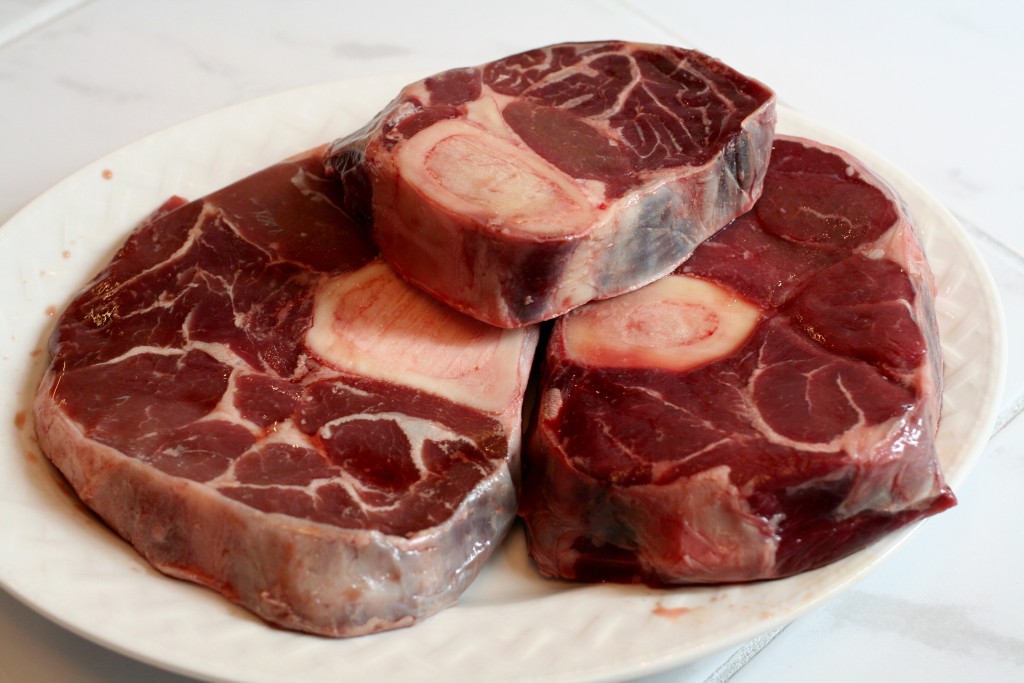
Beef shanks are one of my favourite cuts of beef – in fact, any recipe that calls for stewing beef, I use beef shanks instead now. The shank is a cross section of the leg of an animal. It is really high in connective tissue (read about the amazing health benefits here) and it is on the bone, so it is a perfect cut for cooking low and slow. Braising, stewing and slow-cooking are the way to go with these bad boys. And the longer the better!

Braised Beef Shanks

Ingredients

  • Beef shanks
  • Sea salt (black pepper optional)
  • Cooking fat (tallow, lard, bacon grease, butter, ghee, coconut oil)
  • 2-3 onions, diced
  • garlic cloves, diced
  • bone broth
  • bay leaf

Directions

Bring beef shanks to room temperature, by letting them sit on the counter for 20-30 minutes.

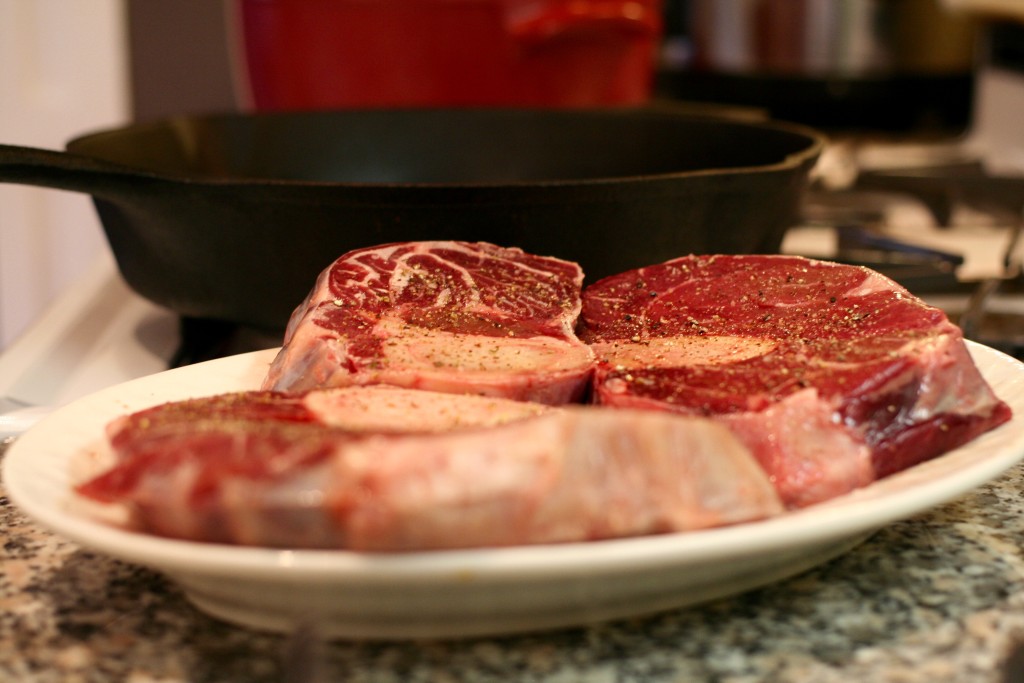
Preheat the oven to 350F. Season the shanks with sea salt, and if desired, black pepper. 

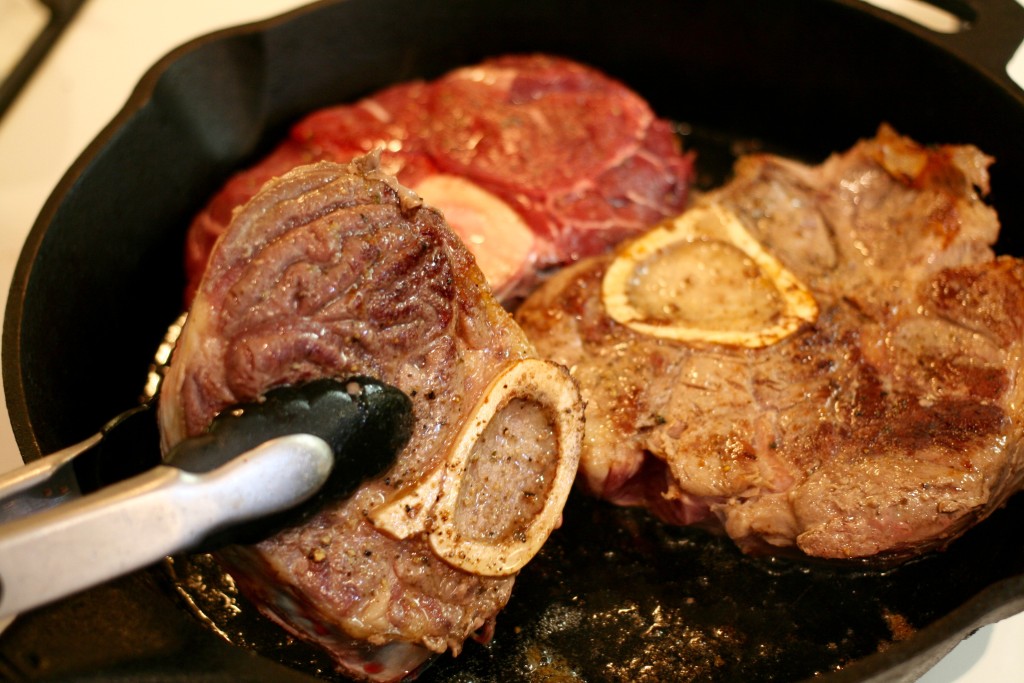
In a large pan over medium high heat, add fat sear the beef shanks until they are beautifully browned on both sides. TIP: let the meat brown for a minimum of 3 minutes before checking it! 

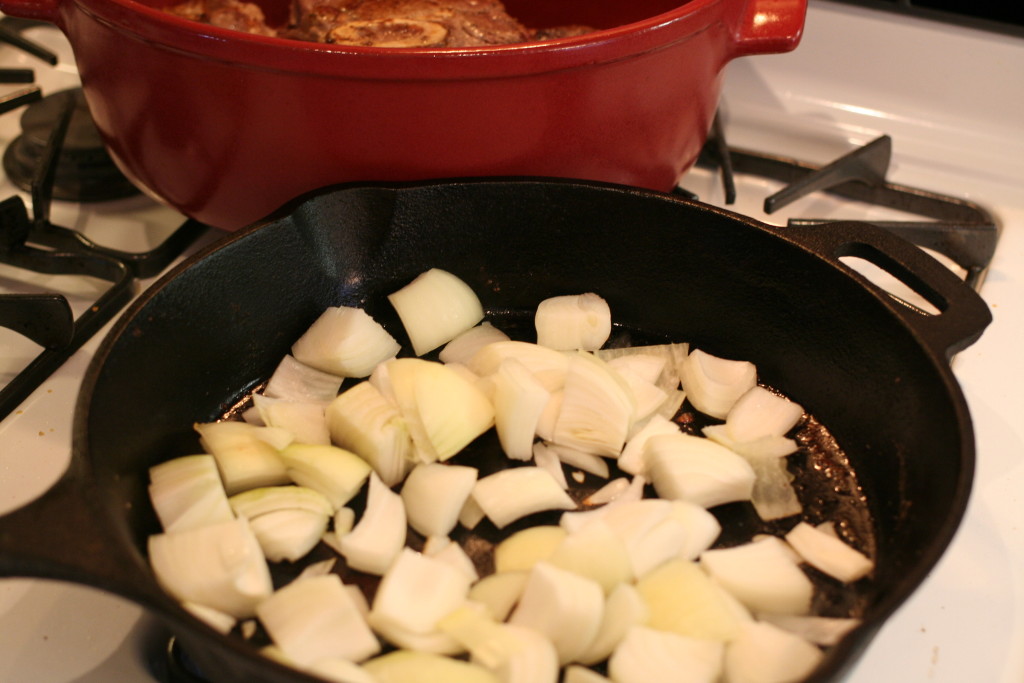
Meanwhile, dice some onions.

When your beef has been seared, place it in a dutch oven or casserole dish. 

Immediately sauté the onions in the pan you just seared the beef in. If you need to, add some more fat. When the onions are translucent, approximately 5-7 minutes, spoon them on top of the beef shanks.

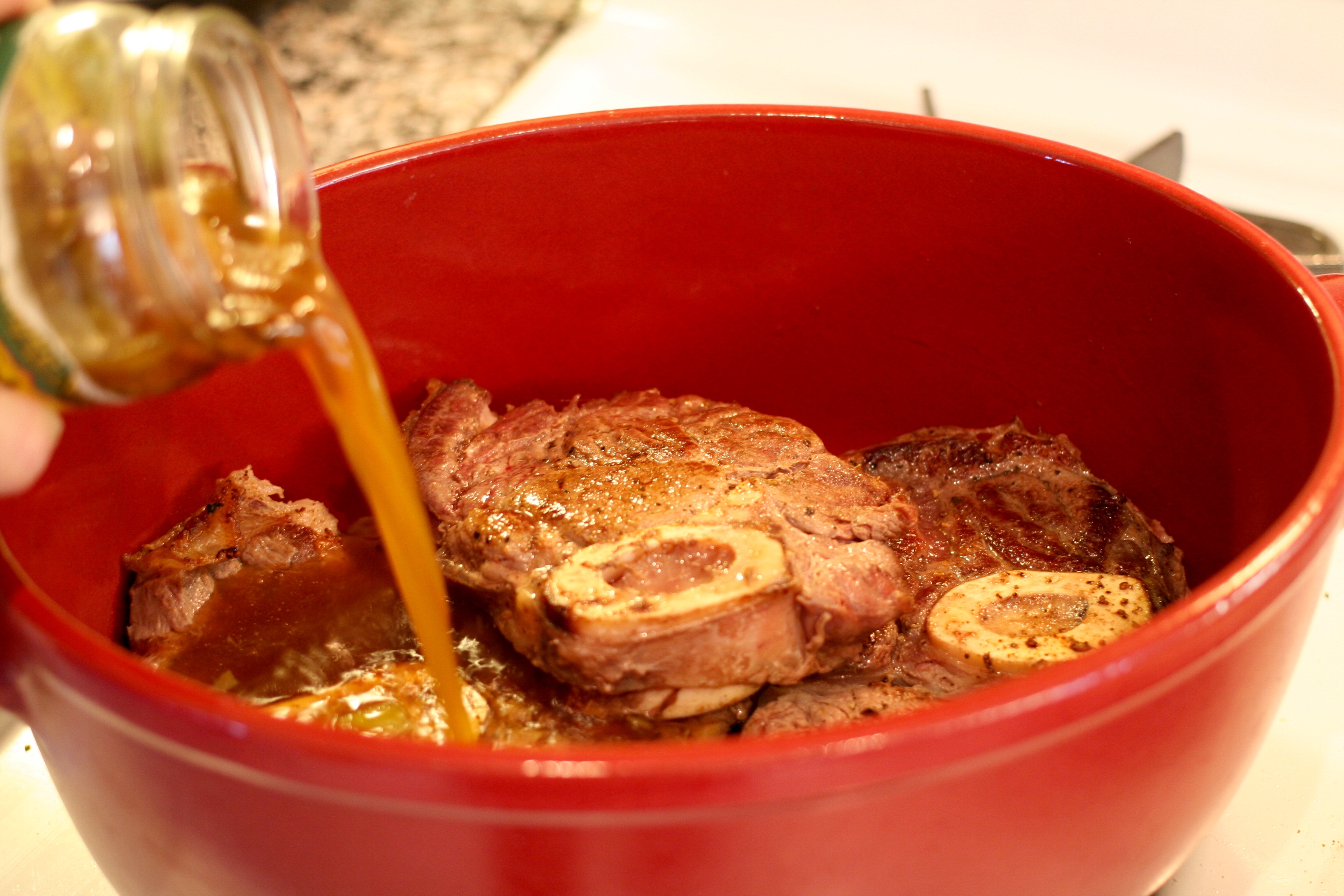
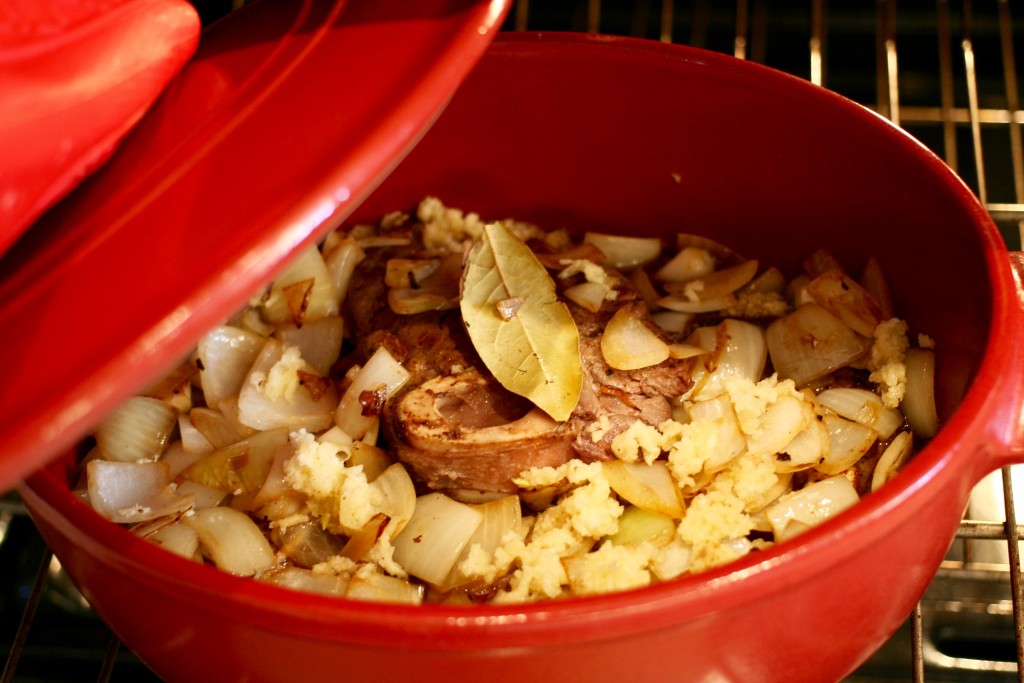
Add garlic (if you like garlic, use a whole head!), bay leaf and enough broth to come about ¾ of the way up the sides of the beef.

Cover and cook for a minimum of 2 hours, ideally 3 or more.

Serve with sautéed greens and plantain biscuits for sopping up the yummy broth and onions!

Notes

This can also be done in a slow cooker! Follow the same steps and place in your slow cooker for 8-12 hours.

This is my super basic recipe for braising beef shanks. Please get creative with this recipe! Add red wine instead of broth, or jack up the spices to create your own spin! But when in doubt, keep it simple and let the quality of the meat speak for itself! Enjoy!


Braised Beef Shanks
Write a review
Print
Prep Time
10 min
Total Time
2 hr
Prep Time
10 min
Total Time
2 hr
Ingredients
  1. beef shanks
  2. sea salt (black pepper optional)
  3. 1-2 tbsp cooking fat (tallow, lard, bacon grease, butter, ghee, coconut oil)
  4. 2-3 onions, diced
  5. garlic cloves, diced
  6. bone broth
  7. bay leaf
Instructions
  1. Bring beef shanks to room temperature, by letting them sit on the counter for 20-30 minutes.
  2. Preheat the oven to 350F.
  3. Season the shanks with sea salt, and if desired, black pepper.
  4. In a large pan over medium high heat, add fat sear the beef shanks until they are beautifully browned on both sides. Make sure to let the meat brown for a minimum of 3 minutes before checking it!
  5. Meanwhile, dice some onions.
  6. When your beef has been seared, place it in a dutch oven or casserole dish.
  7. Sauté the onions in the pan you just seared the beef in. If you need to, add some more fat.
  8. When the onions are translucent, approximately 5-7 minutes, spoon them on top of the beef shanks.
  9. Add garlic (if you like garlic, use a whole head!), bay leaf and enough broth to the dish to come about ¾ of the way up the sides of the beef.
  10. Cover and cook for a minimum of 2 hours, ideally 3 or more.
Notes
  1. This can also be done in a slow cooker! Follow the same steps and place in your slow cooker for 8-12 hours.
  2. This is my super basic recipe for braising beef shanks. Please get creative with this recipe! Add red wine instead of broth, or jack up the spices to create your own spin!
Amanda Naturally http://www.amandanaturally.com/

Mayo

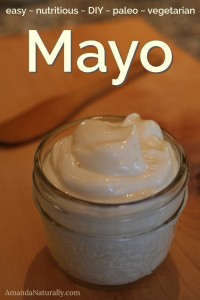
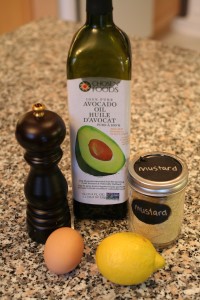
Mayo | AmandaNaturally.comMayonnaise has a very bad reputation, and honestly, that’s probably for good reason. At least that’s the case for the junk sold at the grocery store! Do you know what actually goes into real mayo? It’s simple: raw egg, oil and lemon or vinegar. Simple, straight forward and depending on the oil that you use, actually pretty darn healthy! So you might already be wondering… if it’s made with raw egg, how come it’s not found in the fridge? Well my friends, here’s the low-down on this artificial food we like to refer to as mayo. Check out the ingredients lists in these popular brands of mayonnaise:
Hellman’s Mayo

Canola Oil, Water, Liquid Whole Egg, Vinegar, Salt, Liquid yolk, Sugar, Spices, Concentrated Lemon Juice and Calcium Disodium EDTA

Kraft Mayo

Soybean Oil, Water, Eggs, Egg Yolks, Vinegar, Contains Less Than 2% of: Sugar, Salt, Lemon Juice Concentrate, Calcium Disodium EDTA As A Preservative, Dried Garlic, Dried Onions, Spice, Natural Flavor.

Miracle Whip

Water, Soybean Oil, Vinegar, Sugar, Modified Cornstarch, Eggs, Contains 2% or less of: Salt, Mustard Flour, Paprika, Spice, Natural Flavor, Potassium Sorbate (preservative), Enzyme Modified Egg Yolk, Dried Garlic.

Veganaise

Organic Expeller-Pressed Soy Oil, Filtered Water, Organic Brown Rice Syrup, Organic Apple Cider Vinegar, Organic Soy Protein, Sea Salt, Organic Mustard, Organic Lemon Juice Concentrate.


I bolded the ingredients that are questionable. Aside from the preservatives that are clearly required to make raw egg shelf-stable, my biggest concern is the junky, inflammatory seed oils they all use. Canola and soy oils Homemade Mayo | AmandaNaturally.comare not healthy in any way, shape or form. They are incredibly high in omega-6 fats and they are chemically unstable. Exposure to light, oxygen and heat will cause them to break down, creating free radicals and wrecking havoc on your tissues. Also, the term spice is a catch all term. The ingredients used are not disclosed. Also, sugar?? What the heck! And cornstarch in the Miracle Whip? They’re so scared of the fat and cholesterol from the egg, that they’ve added cornstarch as a thickener, instead of utilizing the egg. And don’t get me started on that enzyme modified egg yolk business…

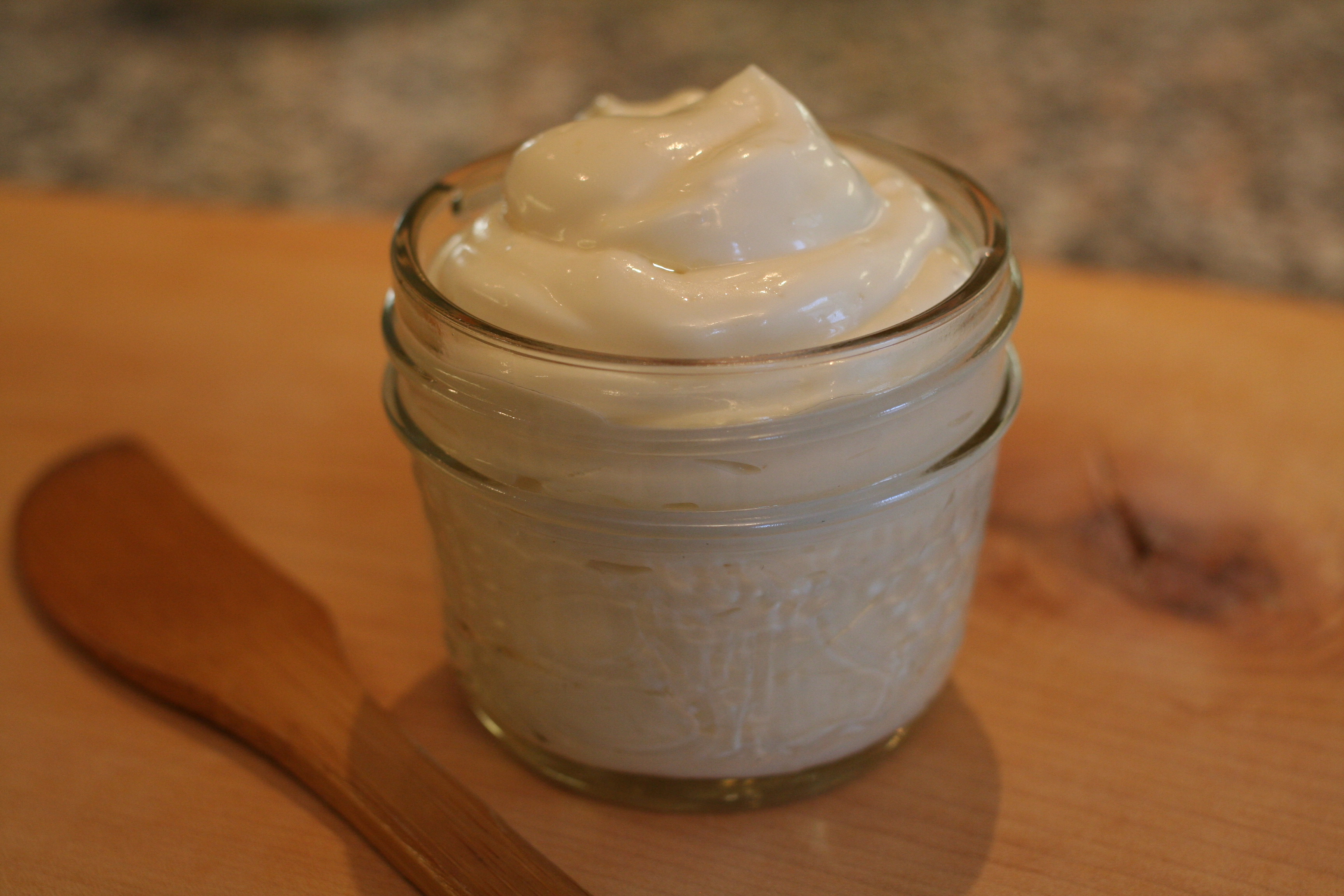
It’s a shame, because when made properly, mayo is actually like a fat supplement! A pastured or organic egg brings a whole whack of nutrients to the table. Combine that with a high quality oil and you’ve got yourself a very healthy food! So without further ado, here’s my recipe for:

Homemade Mayo

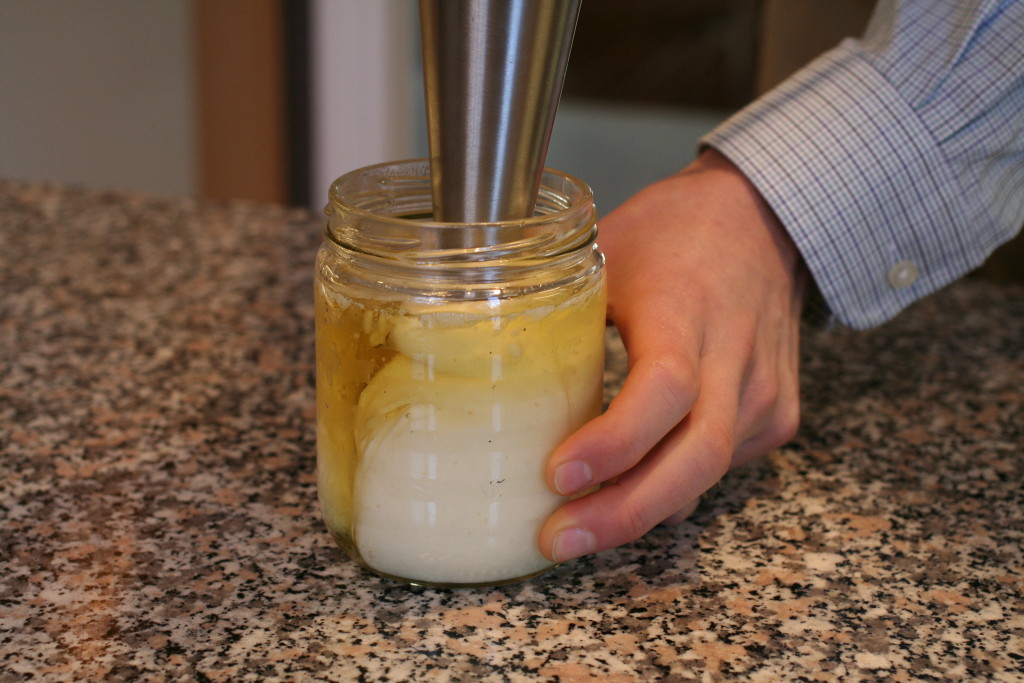
Combine 1¼ cup avocado oil, 1  raw egg, the juice of ½ a lemon, a pinch of sea salt and a pinch of mustard in a jar and let sit for about an hour. Bringing the ingredients to room temperature is critical.


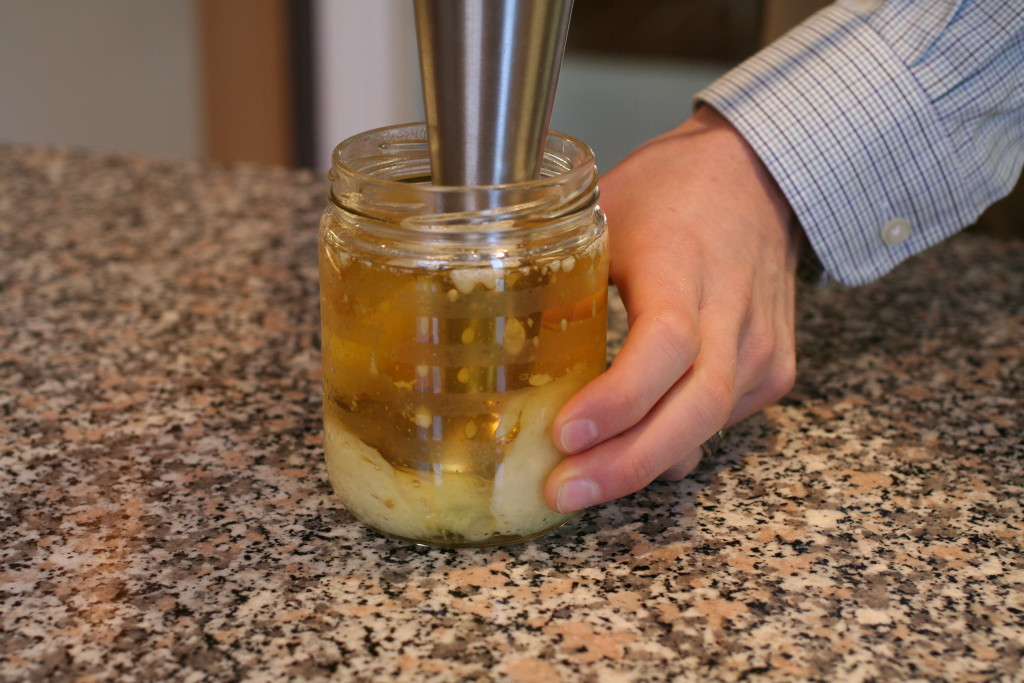
Once at room temperature, place your immersion blender in the bottom of the jar.


Turn it on and slowly pull the immersion blender upwards over the course of 10-15 seconds. If necessary, drop the blender back down to the bottom and repeat once more.


After about 20-30 seconds it will be fully emulsified ie. thick and creamy!

A few notes:

  • It lasts at least 7 days in the fridge, likely more.
  • It is a fabulous vector for other delicious flavours.
    • Add some sriracha for sweet potato fry dip.
    • Mix with lime juice and cilantro for a taco or nacho topping.
    • Turn into ranch dressing using this fabulous recipe by Melissa Joulwan at The Clothes Make The Girl.
  • Play around with oils. This recipe calls for avocado oil, because it’s a neutral taste. Substitute ¼ cup of avocado oil for another oil for a different flavour! Try bacon grease for a wonderfully smoky mayo. Coconut oil makes a thicker, sweeter mayo.
  • A handheld immersion blender is really key for this recipe. You can use a food processor, but it really works best with an immersion blender!

UPDATE: 9 times out of 10 this is fool-proof, however every so often you may experience the crushing blow of a broken mayo. This is super disheartening, especially if you feel like you have to throw out all those ingredients! But WAIT! You don’t need to toss the ingredients. Simply follow this amazing trick for repairing broken mayo!

Mayo
Write a review
Print
Prep Time
1 hr
Cook Time
2 min
Total Time
2 min
Prep Time
1 hr
Cook Time
2 min
Total Time
2 min
Ingredients
  1. 1 ¼ cup avocado oil
  2. 1 egg, pastured or organic
  3. juice of ½ a lemon
  4. pinch of mustard
  5. pinch of sea salt
Instructions
  1. Combine all ingredients in a jar and let sit for about an hour. Bringing them to room temperature is critical.
  2. Once at room temperature, place your immersion blender in the bottom of the jar.
  3. Turn it on and slowly pull the immersion blender upwards over the course of 10-15 seconds.
  4. Drop the blender back down to the bottom and repeat once more.
Notes
  1. Bacon Mayo = 1 cup avocado oil + ¼ cup bacon grease
  2. Sweet Mayo = 1 cup avocado oil + ¼ cup melted coconut oil
Amanda Naturally http://www.amandanaturally.com/
Copyright 2014 Amanda Naturally | Design by The Nectar Collective